
Guests
Guest Blogging
The Hidden Environmental Costs of Technological Innovation in Modern Agriculture
by
Ana Lucía Martínez Muñoz
Agricultural Engineering student
EARTH University
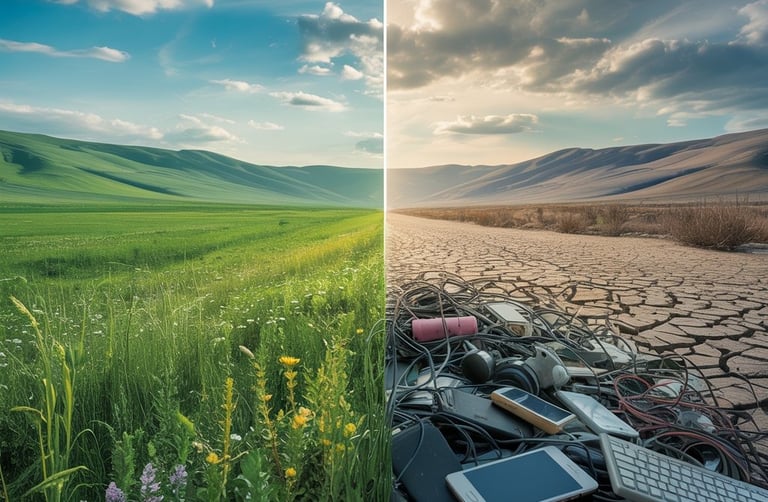
Modern agriculture increasingly relies on technologies such as drones, sensors, computers, and artificial intelligence, as these tools are believed to enhance the accuracy and efficiency of agricultural practices and increase production yields. Nevertheless, the environmental impacts associated with their manufacturing processes and waste management are often overlooked. The production of these digital tools involves mineral extraction, exposure to radioactive substances, and the handling of hazardous materials. Therefore, the use of technology in agriculture is not always environmentally beneficial, as it generates significant electronic waste and raises serious concerns about sustainability. This issue is particularly evident in the growing reliance on lithium batteries, the lack of adequate recycling infrastructure, and the frequent replacement of technological equipment.
The agricultural sector has attempted to transition away from fossil fuels toward less environmentally damaging alternatives. One such solution is the use of lithium batteries, which are now commonly used in tractors, drones, GPS-guided equipment, and sensors (YOK Energy, n.d.). These batteries offer several advantages, including long lifespan, lightweight design, compact structure, and high energy density (HIITIO, n.d.). However, their production involves significant environmental costs. The extraction and processing of lithium and other metals contribute to land degradation, habitat loss, excessive water consumption, soil contamination, and water pollution (Anderson, 2024).
The transition toward lithium-based technologies in agriculture reflects a genuine effort to reduce dependence on fossil fuels and improve efficiency. On the surface, this shift appears to align with global sustainability goals: lithium batteries are cleaner at the point of use, enable precision agriculture, and support innovations that can increase productivity while potentially reducing chemical inputs. In this sense, they represent a necessary step forward in modernizing agriculture.
However, evidence presented in research complicates this optimistic narrative. The environmental costs associated with lithium extraction and processing such as land degradation, water depletion, and ecosystem disruption suggest that these technologies are not inherently “green,” but rather relocate environmental harm from one stage of production to another. Instead of emissions from fuel use, the damage occurs earlier in the supply chain, often in regions where environmental regulations may be weaker.
From a critical perspective, this reveals a key issue: technological solutions in agriculture are often evaluated too narrowly, focusing on efficiency and output while overlooking full life-cycle impacts. The use of lithium batteries may reduce certain forms of pollution, but it simultaneously introduces new environmental and ethical concerns that cannot be ignored.
In addition, the disposal of electronic waste presents a major global challenge. Many countries lack sufficient infrastructure, regulations, and policies to manage electronic waste effectively. For example, in Nigeria, approximately 90% of electronic waste is recycled informally, exposing workers and communities to toxic chemicals and environmental contamination. When electronic waste is burned, it releases hazardous heavy metals and carcinogenic substances into the air. When disposed of in landfills, it can generate compounds linked to endocrine disruption, cancer, and other serious health risks (Abogunrin-Olafisoye & Adeyi, 2025).
Furthermore, the volume of electronic waste continues to grow due to the frequent replacement of technological equipment. This trend is driven by two main factors. First, many devices have relatively short lifespans. For instance, environmental sensors are often marketed as lasting between two and five years, but their actual lifespan may be significantly shorter without proper maintenance (Industrial Scientific, n.d.). Similarly, agricultural drones typically last up to five years under optimal conditions (Hongfei Aviation Technology, 2023). Second, continuous software updates often render older hardware obsolete, forcing users to replace functioning equipment.
In conclusion, while technological innovation in agriculture improves efficiency and productivity, it also introduces significant environmental and health risks. The increasing dependence on lithium batteries, combined with inadequate waste management systems and rapid equipment turnover, contributes to both short-term and long-term sustainability challenges. Addressing these issues is essential to ensuring that technological advancements in agriculture do not come at the expense of environmental protection and human well-being.
References
Abogunrin-Olafisoye, O. B., & Adeyi, O. (2025). Environmental and health impacts of unsustainable waste electrical and electronic equipment recycling practices in Nigeria's informal sector. Discover Chemistry, 2, 4. https://doi.org/10.1007/s44371-024-00075-x
Anderson, L. (2024). The harmful effects of lithium batteries. Greenly. https://greenly.earth/en-gb/blog/industries/the-harmful-effects-of-our-lithium-batteries
Hongfei Aviation Technology. (2023, September 20). How long does an agricultural drone last? https://www.hongfeidrone.com/news/how-long-does-agricultural-drone-last/
HIITIO. (n.d.). Lithium battery application in agricultural machinery and aerial work platforms. https://www.hiitio.com/lithium-battery-application-in-agricultural-machinery-aerial-work-platform/
Industrial Scientific. (n.d.). How long do gas sensors last and what impacts their life expectancy? https://www.indsci.com/en/blog/how-long-do-gas-sensors-last-and-what-impacts-their-life-expectancy
YOK Energy. (n.d.). The uses of lithium batteries in agriculture. https://www.yokenergy.com/article/the-uses-of-lithium-batteries-in-agriculture/
Contact
Questions or thoughts? Reach out anytime.
Phone
© 2025. All rights reserved.